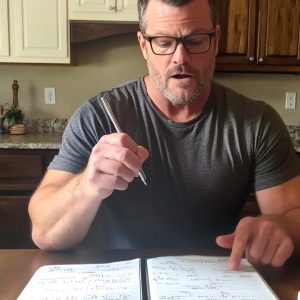
The call came on a dull, gray afternoon—one of those quiet days when the sky hangs low and the air feels thick with something unspoken. I was sitting at my kitchen table, absentmindedly stirring a cup of coffee that had already gone cold, when the phone rang. The moment I answered, I knew what the call was about. There was no tremor in my voice, no sudden rush of grief. Just a strange, steady calm.
“My father passed,” I told the lawyer. The words felt oddly rehearsed, as though I’d known I would say them someday without quite knowing how I’d feel when the moment arrived. We had never been close. Not really. He had always been a distant figure in my life—someone I orbited around but never truly connected with. I was his only child, but that fact never seemed to bind us together in any meaningful way.
So when the lawyer asked me to come in for a meeting, I assumed it would be simple. Some paperwork. Maybe an old account with a few hundred dollars. A signature or two. Nothing more. My father never lived extravagantly, and I never imagined he had much to leave behind.
When I arrived at the lawyer’s office, the air smelled faintly of old books and coffee. The room was lined with wooden shelves stacked with thick, leather-bound volumes—dusty and unmoving, like the memories I’d long stopped trying to access. The lawyer greeted me with a sympathetic smile, one that told me he’d handled dozens of meetings like this. For him, this was routine. For me, it was… something else. Not grief exactly, but a strange mix of detachment and curiosity.
We sat down at a polished desk, and he opened a brown folder with careful hands. I listened politely as he described the legal process, the estate details, the standard procedures. His voice was calm and practiced, each word deliberate and measured. I nodded along, expecting nothing more than what I had already prepared myself for.
Then he read one line that made me sit up straighter, as if the air itself shifted around me.
“As per your father’s wishes… the house is yours.”
I blinked.
The house?
For a moment, I thought I’d misheard him. My father’s house—the old home I grew up in? The place I hadn’t seen in years? The house I assumed had long since fallen into disrepair, its walls probably peeling, its rooms filled with dust and the remnants of a life I left behind?
I stared at the lawyer, waiting for some clarification, but he continued reading as if this were the most natural thing in the world. My thoughts raced, tripping over themselves in confusion.
Why would he leave me the house?
Why that house, of all things?
The lawyer paused, perhaps sensing the questions swirling behind my silence. He folded his hands, his expression softening before he explained something I hadn’t expected—something that made the room feel suddenly smaller, the air heavier.
“Your father took great care of the property,” he said. “Much more than anyone realized. He made regular payments, oversaw repairs, and kept the house in remarkably good shape. It wasn’t neglected. In fact…” He hesitated, searching for the right words. “He put a great deal of effort into preserving it.”
I couldn’t speak. I wasn’t sure what surprised me more—that he had maintained the house… or that he had cared enough to do so.
The lawyer continued, his voice gentle but steady. He told me my father had updated the wiring, replaced the roof, refinished the floors, and hired a gardener to tend the yard. He had kept everything running—quietly, privately, almost obsessively. As if he were caring for something precious.
Or waiting for someone.
I felt a tightening in my chest as memories of my childhood flickered in and out—fragments of rooms filled with sunlight, the creak of old floors, the murmur of my father’s voice coming from another part of the house. Memories I had buried, convinced they meant nothing.
The lawyer slid a key across the desk. A simple metal key, dull around the edges, warm from his hand.
“He wanted you to have it,” he said. “All of it.”
I stared at the key for a long moment. It felt like a weight—not because of the metal, but because of everything it represented. A home I had run from. A past I thought I’d made peace with. A father I never truly understood.
“Did he… ever say why?” I finally asked.
The lawyer looked at me, his eyes full of something like sympathy.
“He spoke of you often,” he said quietly. “Not in the way you might expect. But… he cared. More than he ever knew how to show.”
The words settled over me slowly, like dust in a beam of fading light. In that moment, the house became more than just a building. It became a question. A mystery. A final message from someone I had spent my entire life trying to understand.
And as I closed my fingers around the key, I realized I wasn’t just inheriting a property.
I was inheriting the truth he never found the courage to tell me.